


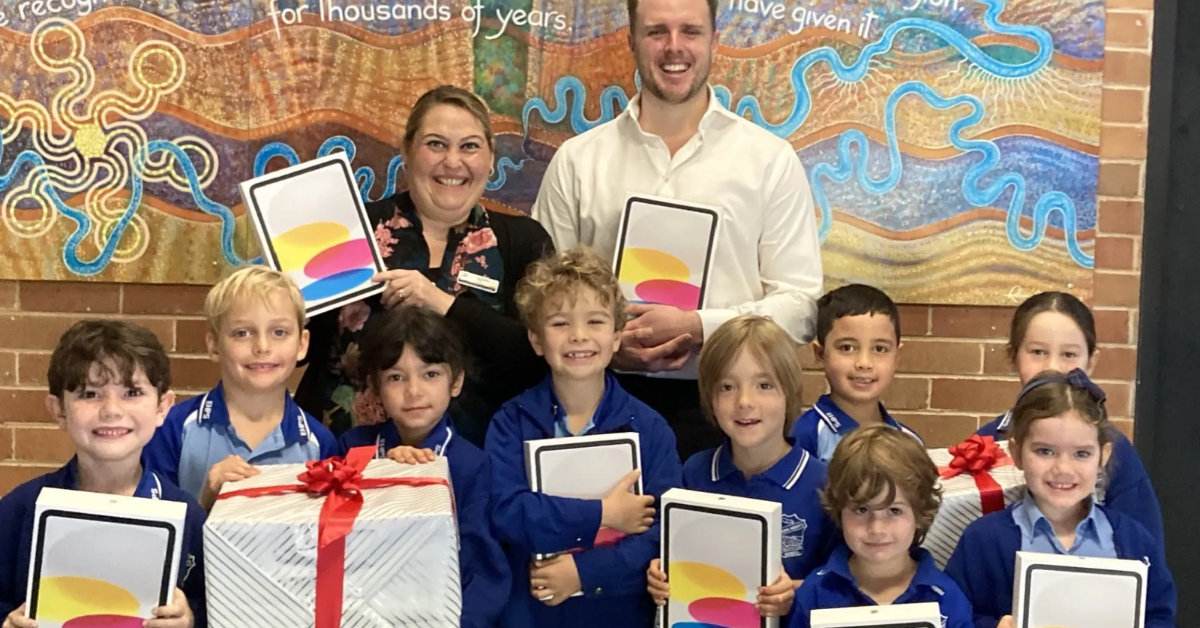
Elanora Heights Public School has drawn on parent fundraising and community gifts to put devices in classrooms. The school’s website credits former student Daniel Hindmarsh and Belle Property with donating 22 iPads for Kindergarten to Year 2. The page carries no date, value or usage details. The gift therefore serves as one example of how devices reach local classrooms, not as recent news. A new state rule for 2027 changes the picture for every public primary school in NSW, this one included.
The NSW Government announced on 8 November that public primary schools will end bring-your-own-device (BYOD) requirements in 2027. NSW Education published its own account the next day. Under the plan, no primary school will require pupils to bring a device through a BYOD program. Pupils will use school-supplied technology where it has educational value. Neither version says how schools will pay for those devices.
Public records show no sign that Elanora Heights required pupils to bring devices. The 2021 school handbook describes banks of laptops, Chromebooks and iPads for classroom use, which the handbook links to P&C fundraising. It does not mention a BYOD program.
A Record of P&C-Funded Technology
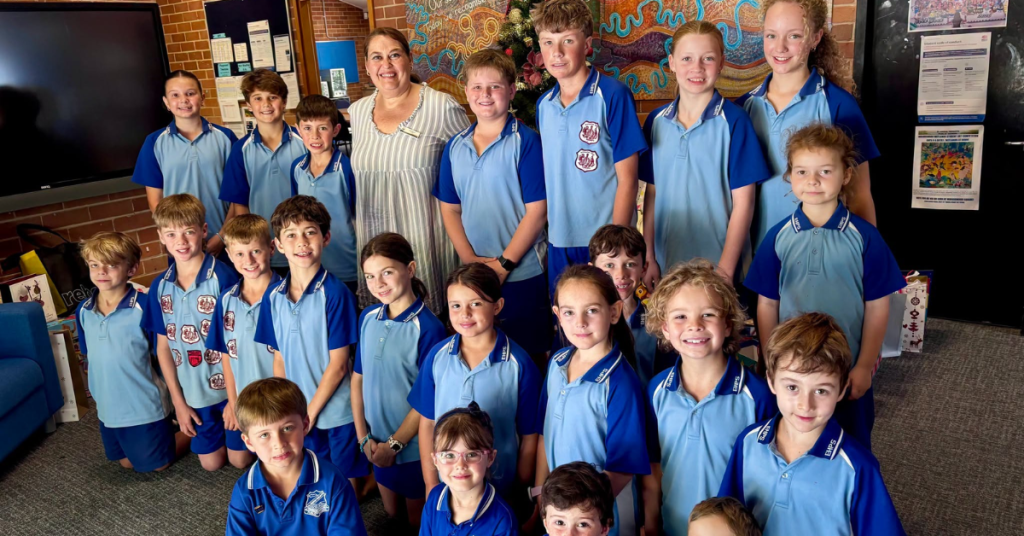
The school’s community page lists P&C-funded CleverTouch panels for classrooms in 2019, and laptops, iPads and recharge hubs in 2021. The P&C raises money through events, the canteen and the uniform shop, and members vote on how to spend it. Its 2025 president’s report says the P&C raised more than $41,000 that year. The report lists planned contributions of $25,500 for a Years 3–6 sunshade, $5,000 for readers and $2,000 for the Bushcare program. Devices did not feature in that list. The report separately thanks Daniel Hindmarsh of Belle Property for sponsoring Movie Night, and it does not mention the iPads.
The community page said the P&C would fundraise for an IT refresh in 2025. The president’s report lists the purchase of new IT as a goal for 2026. Minutes from the P&C meeting on 25 February 2026 show the principal was to send the committee an IT refresh budget. Members deferred a proposal that the P&C contribute $10,000 towards school IT to a later meeting. At the time of writing, the school’s page posts no later 2026 minutes. No public record confirms a completed refresh or any spending.
What the 2027 Change Means for Families
The government says families will not have to buy laptops or tablets for public primary school in 2027 because of a BYOD policy. The Premier said pupils would spend more time reading books and writing. He said parents would not have to pay for expensive devices. The Deputy Premier and Education Minister said families did not need to spend over $1,000 on a laptop or tablet. She linked that cost to BYOD requirements ahead of Christmas.
High school BYOD programs stay voluntary. The government says it will monitor and evaluate BYOD use through 2027 to inform future policy. Its statements do not address devices that families have already bought. Families weighing a purchase for 2027 can check the school’s plans first.
Fifteen Minutes a Day for the Youngest Pupils
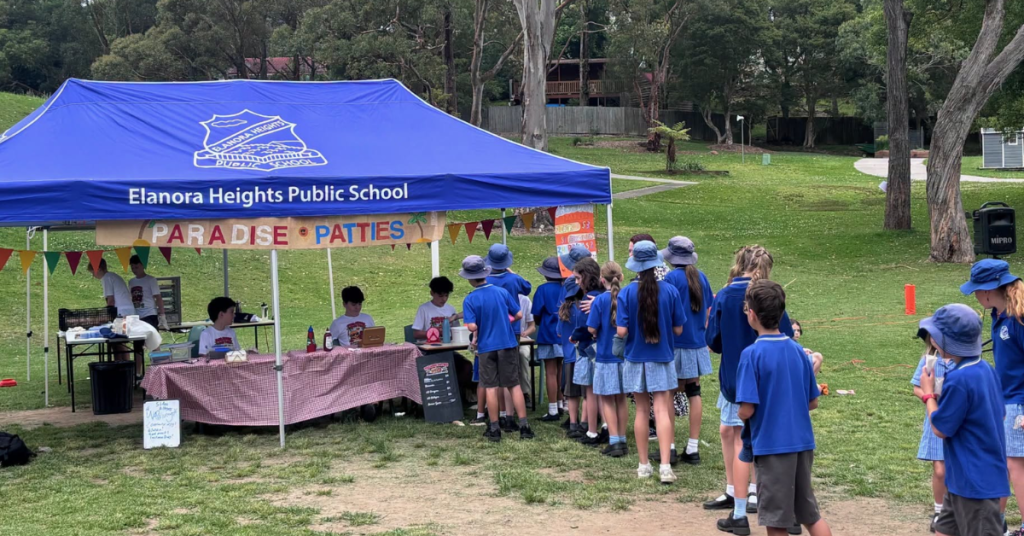
Separate screen-use guidelines recommend up to 15 minutes a day on individual devices for Kindergarten to Year 2. The limit is averaged across a week. The department says schools can start in Term 1, 2027. All schools must follow the guidelines by Term 1, 2028. The guidelines name laptops, desktop computers and tablets as individual devices. Supply and duration are separate questions. A school can own a class set of tablets and still keep each child’s daily use short.
The guidelines exempt reasonable adjustments for pupils with specific learning needs. They also exempt translation devices. The government’s release also mentions exemptions for disability or additional needs and for subjects where screens are essential. Homework follows a similar line, with the government saying no screen-based homework before Year 5.
Where Devices Can Still Support Learning
The government says digital literacy remains part of the curriculum. The Australian Public Policy Institute released a paper by Dr Jo Orlando in late October. It sets out a framework for deciding when technology supports learning. It weighs wellbeing and digital literacy alongside academic outcomes.
Macquarie University researchers led a report, released on 5 October. It surveyed key education groups across NSW on their views and practices. The government says 57% of primary pupils reported being distracted when they used screens in class. The figures record what people say about distraction, not how pupils performed. No source reviewed links the iPad donation, or any other local device, to results.
The principal of Chatswood High School told reporters in September that staff noticed better handwriting and engagement after the school cut back device use. The school teaches older students. The comments are one school’s account, not a measured result for primary classrooms.
Two Nearby Schools Describe P&C Support
Curl Curl North Public School lists P&C funding for classroom iPads and computer equipment. It sits beside shade structures and play equipment. Newport Public School’s 2026 parent booklet calls technology a school focus. It says the P&C has supported resources in recent years. It describes iPads for Kindergarten and Chromebooks in classrooms for Years 1 to 6. The booklet does not say who paid for each purchase. The two schools are examples only, and no ranking or trend follows from them.
Fundraising Capacity and the Equity Question
A national radio program on 14 September asked why schools raise money for items such as laptops, classroom resources and toilet repairs. Its summary says education experts argue that relying on communities to fill funding gaps deepens inequity. Guests included a parent who has researched school funding, an Australian Catholic University academic and the P&C Federation of NSW president.
The evidence reviewed does not show a statewide trend, a measured access gap on the Northern Beaches or a shortfall at Elanora Heights. My School groups school-raised income into broad categories, including fees and parent contributions and other private sources such as donations, fundraising and sponsorships. It does not show what share of devices came from parent fundraising or gifts.
The state has funded digital access directly before. The Rural Access Gap program ran from July 2020 to June 2024 and aimed to lift digital access in rural and remote public schools. A state case study puts its estimated cost at completion at $307 million. The program has no link to Elanora Heights or its donation. It shows only that a state-funded model exists.
What Remains Unknown
The record leaves open when the donation happened, what it was worth and how classes use the tablets. The government’s announcements do not say how many school-supplied devices each primary school will receive. No public figure shows how many of the school’s devices came from the P&C, donors or the department. The P&C’s deferred $10,000 proposal is the only public sign of planned new IT spending in the records reviewed.
Published Date 14-November-2026